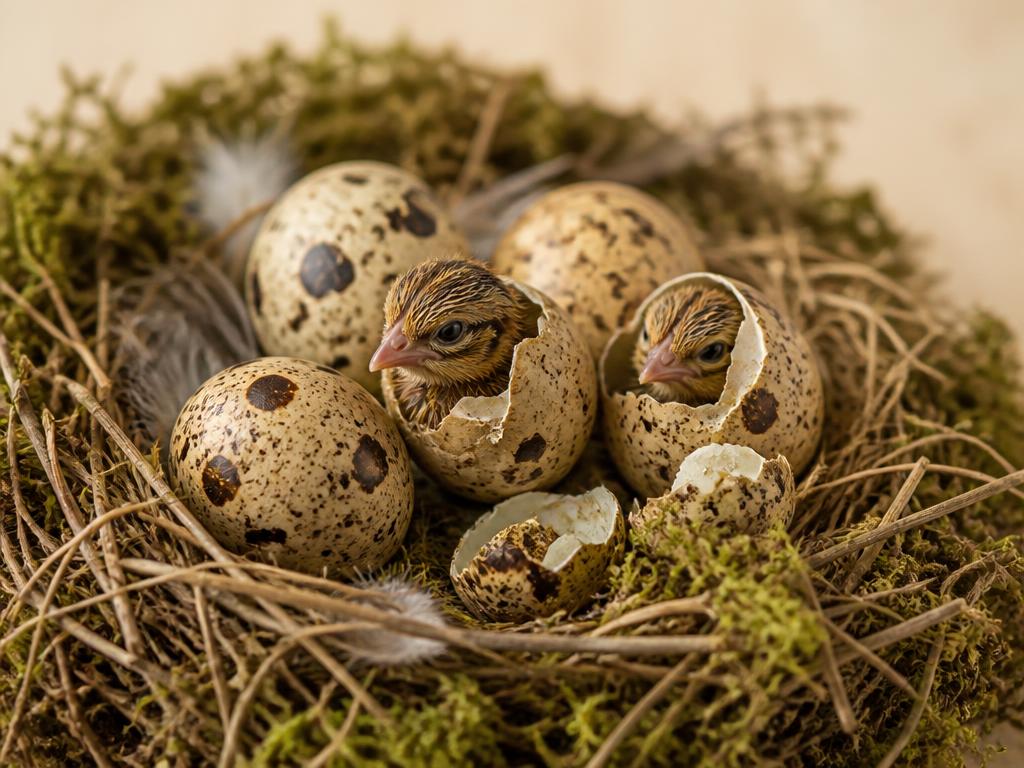
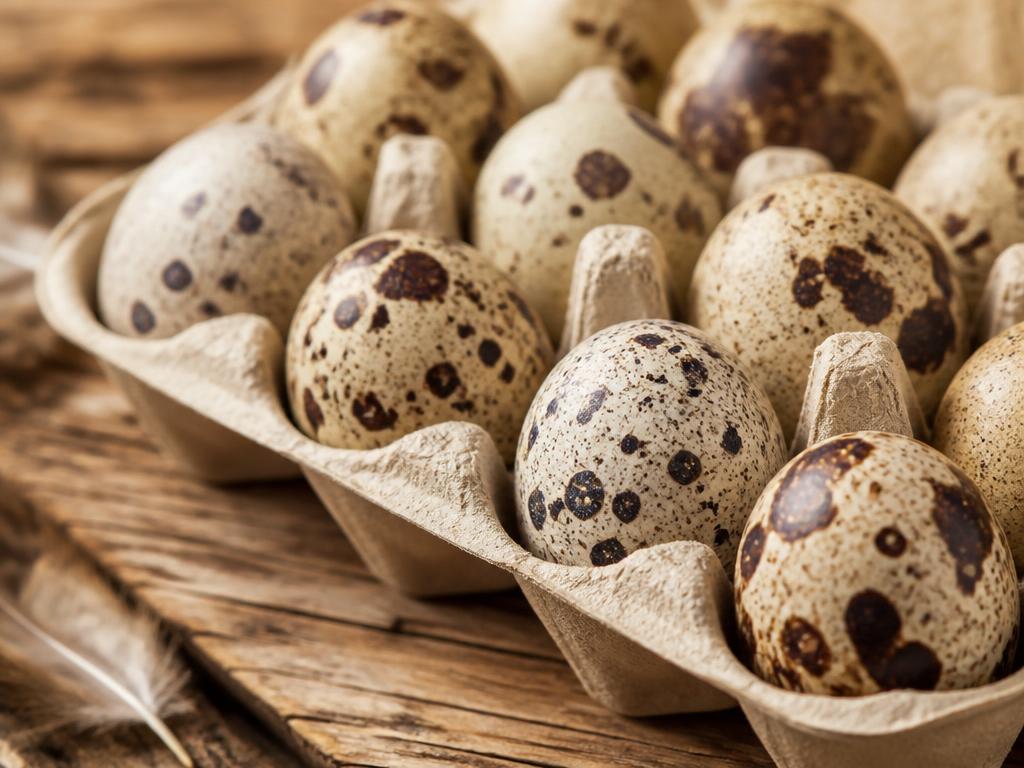
A quail egg is roughly a fifth of the size of a chicken egg, with a proportionally bigger yolk — which is why quail eggs taste richer and creamier. As a rule of thumb, 4–5 quail eggs stand in for one chicken egg in a recipe.
Size and appearance
Quail eggs weigh around 10–12 grams against a typical 50–60 gram chicken egg. Every shell wears its own speckled camouflage pattern — no two are quite alike — which is part of why they look so striking on a plate or in a jar of pickled eggs.
The yolk ratio is the real difference
Relative to their size, quail eggs carry a larger yolk than chicken eggs. More yolk means more richness: creamier scrambled eggs, silkier sauces and a more indulgent bite when soft-boiled. It's the single biggest reason chefs reach for them.
Cooking comparison
| Quail egg | Chicken egg | |
|---|---|---|
| Soft boil | ~2 minutes | 5–6 minutes |
| Hard boil | ~3½–4 minutes | 9–10 minutes |
| Fried | under a minute | 2–3 minutes |
| Recipe swap | 4–5 eggs | 1 egg |
Because they're so quick to cook and so pretty when halved, quail eggs shine in canapés, salads, ramen, Scotch eggs (mini versions are a crowd-pleaser) and pickling.
Cracking them without the mess
Quail shells are thin but the inner membrane is surprisingly tough. Rather than tapping and pulling, nick the pointed end with a small serrated knife and tip the egg out. For hard-boiled eggs, roll them gently under your palm and the shell peels away with the membrane.
Freshness is everything
Whichever egg you choose, freshness decides the eating. Our table eggs are gathered daily from free-to-roam coveys here in Neath and date-marked batch by batch, so what reaches your kitchen is genuinely fresh. Order fresh quail eggs for collection in Neath, local delivery across South Wales or UK postage.